
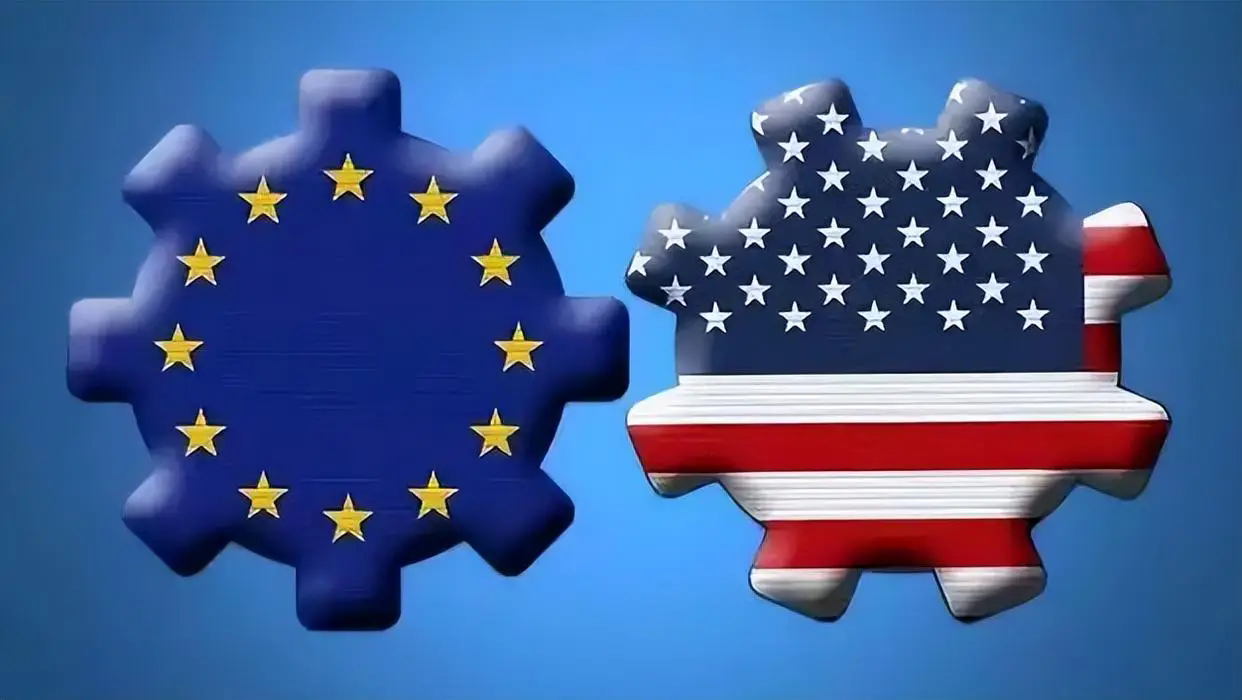
In particular, the EU is awaiting clarification on Washington's next steps following the Supreme Court's decision
The European Commission is demanding that the United States comply with the terms of the trade agreement between the parties concluded last year after the US Supreme Court overturned Trump’s global tariffs and the latter responded with new duties. This is stated in the institution’s statement on February 22.
The EC said that Washington should provide a full explanation of the steps it intends to take following the court’s decision.
The court overturned Trump’s global tariffs on February 20, after which the US president announced temporary tariffs of 10% for all countries, and later raised them to 15%.
«The current situation is not conducive to fair, balanced, and mutually beneficial transatlantic trade and investment, as agreed by both sides and stated in the EU-US joint statement of August 2025,» the EC said in a statement.
«A deal is a deal,» the European Commission said, adding that as the United States’ largest trading partner, the EU expects the United States to fulfill its obligations.
«When tariffs are applied unpredictably, they are inherently destructive, undermining confidence and stability in global markets and creating further uncertainty in international supply chains,» the EC stressed.
The European Commission is reportedly in close and constant contact with the US administration. On February 21, EU Trade Commissioner Maros Sefcovic met with US Trade Representative Jason Griner and Commerce Secretary Howard Luttin.
At the same time, Bernd Lange, chairman of the European Parliament’s trade committee, said that at an emergency meeting of the European Parliament on February 23, he would propose suspending legislative work on the agreement until a comprehensive legal assessment and clear commitments from the US are received, Bloomberg writes.
German Chancellor Friedrich Merz expects the burden on German companies to ease, but warned of the “poison” of greater uncertainty.
A British government spokesperson said on February 20 that the UK expects to maintain its privileged trading position with the US. The country will work with the US administration to understand how the court’s decision will affect tariffs for it and the rest of the world.
At the same time, Indian trade negotiators will postpone their visit to Washington scheduled for this week, aimed at securing a temporary trade agreement with the US, CNBC reported, citing sources. India currently faces a reciprocal tariff of 25%, which was to be reduced to 18% after the parties agreed on a temporary agreement in early February with the possibility of changing it.
Japan intends to maintain its commitments to invest and lend $550 billion in the US under a bilateral tariff agreement. The country’s government, according to Japanese media reports, is closely monitoring whether uncertainties related to US tariff policy will arise again after the Supreme Court’s decision. Tokyo has asked Washington to ensure that this will not affect Japanese companies.
On February 23, China’s Ministry of Commerce said it was currently assessing the implications of the Supreme Court’s decision, while calling on the US to remove all unilateral tariffs against its trading partners and announcing that China would defend its interests.
In April 2025, the US president announced “reciprocal” tariffs on goods imported from most trading partner countries, citing the International Emergency Economic Powers Act (IEEPA). On February 20, the Supreme Court ruled that Trump’s use of the IEEPA exceeded his authority. The latter soon invoked Section 122 of the Trade Act of 1974 to first impose a 10% global tariff and then increase it to 15%.
Sectoral tariffs are based on Section 232 of the Trade Expansion Act and are therefore not directly affected by the latest court ruling.
Related Posts
- 00
0000-00
Baosteel raises HRS prices for May sales - 00
0000-00
Nucor Raises Hot-Rolled Coil Price to $1,040 per Ton in the US - 00
0000-00
EU Parliament Approves Trade Deal with US on Steel Tariffs - 00
0000-00
Tokyo Steel Raises April Prices Amid Rising Raw Material Costs - 00
0000-00
Turkey Welded Pipe Prices Rise by $18 per Ton in February
Online Message


Leave A Message
If you are interested in our products and want to know more details, please leave a message here, we will reply you as soon as we can.