
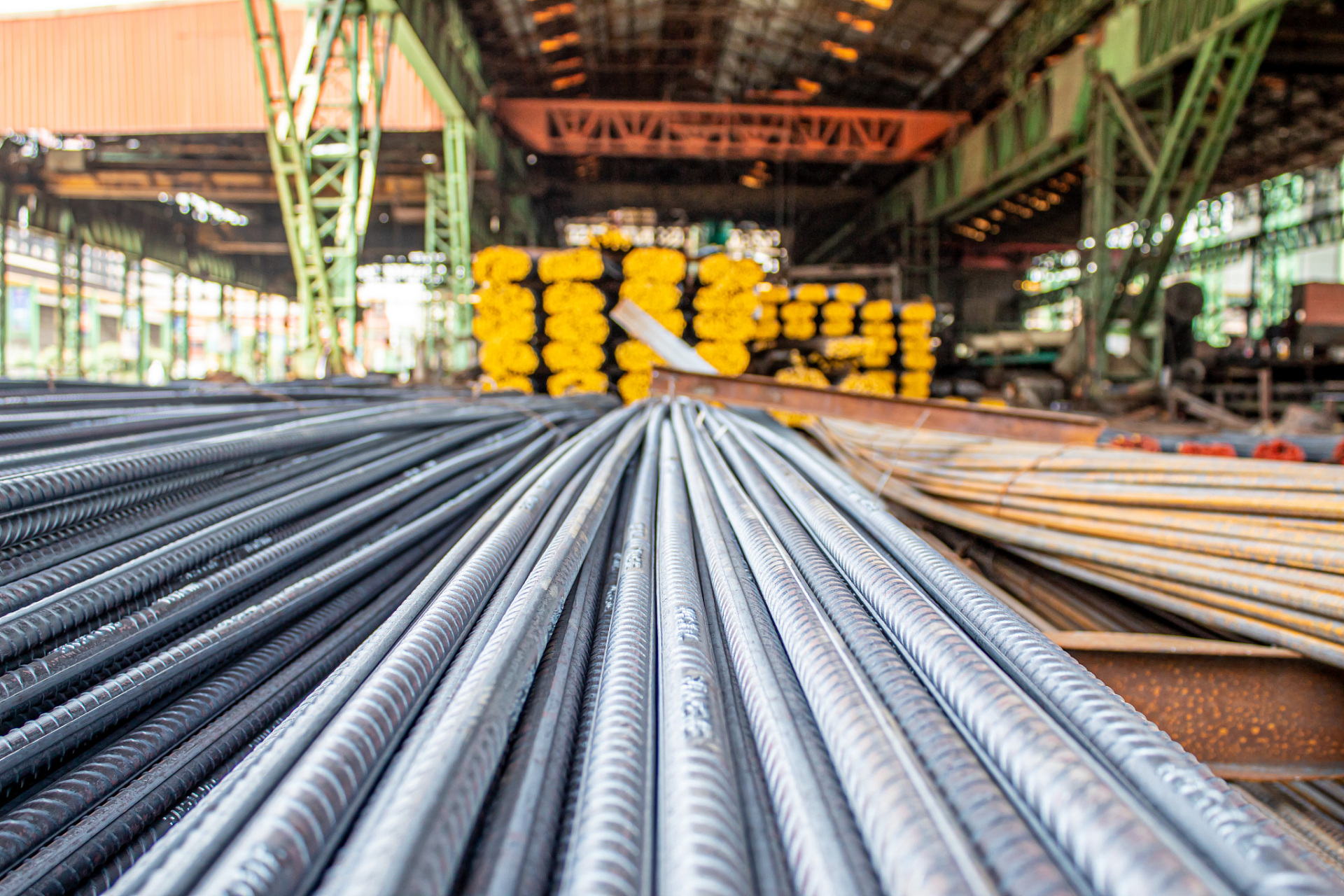
Sales in China got off to a slow start after the holidays due to low demand
The situation on the rebar markets in the first half of October varied from region to region: in Europe and the US, producers are raising prices under pressure from rising costs, whilst in Turkey and China, weak demand and high stock levels are forcing sellers to offer discounts or adopt a wait-and-see approach.
Europe. In Italy, according to estimates by SteelOrbis, steelworks were maintaining a base price for rebar at €470–490/t EXW in early October, whilst taking standard surcharges into account, the price stood at around €735–755/t. Kallanish’s estimate as at 9 October stood at €715/t EXW.
Manufacturers were confident that these levels would be maintained, and justified the increase by citing the need to offset rising costs, particularly logistics costs. Furthermore, they had fairly positive expectations regarding exports.
In the middle of the month, the country’s steelmakers continued to press for price increases, partly due to rising energy costs. Offer prices for rebar in the north of the country had already reached €730–760/t EXW, and €750–780/t EXW in the south, with talk of even higher levels. However, buyers are not yet prepared to purchase large consignments under the current terms, limiting themselves to small volumes.
The European market is seeing a somewhat unusual widening of the price gap between rebar from Italian and German mills for domestic sales. This gap has been growing over recent weeks. Whilst German manufacturers have only implemented moderate price rises since September, their Italian counterparts have adopted a different approach and have been raising prices more aggressively.
In Germany, base prices as at 9 October stood at around €420/t delivered, and €685/t including a size premium.
At the same time, according to market participants, Italian manufacturers are maintaining high domestic prices whilst offering their products for export at significantly lower prices in order to secure orders.
USA. At the end of September, rebar prices in the USA remained stable for the sixth week running, thanks to a balanced market and steady demand from infrastructure and energy projects, as well as the construction of data centres, which offset lower activity in the commercial and residential property sectors.
In early October, prices began to rise under the influence of several factors: a strengthening scrap market, higher transport costs, seasonal maintenance at mills and reduced competitive pressure from imports. An additional signal came in the form of price increases announced by a number of producers. For instance, Nucor Bar Group and Gerdau Long Steel North America raised rebar prices by $30 per short tonne for new orders from specified dates in October. At the same time, weakness in residential construction and uneven activity in the commercial sector continued to hold back demand.
As at 9 October, the price of rebar in the US stood at $1,033.4 per tonne EXW.
Turkey. At the end of September, according to SMM estimates, the Turkish rebar market had virtually ground to a halt due to weak trading activity and a lack of new purchases. Mills had largely finalised their production schedules up to the end of October and were adopting a wait-and-see approach to sales.
In early October, the pressure intensified: traders increased discounts to clear stock, whilst producers were forced to lower their asking prices against a backdrop of weak demand (despite shortages of certain items) and uncertainty regarding exports, particularly due to the deteriorating security situation in the Black Sea.
In the middle of this month, the domestic market saw the conclusion of this year’s final wave of active restocking. This was further held back by remaining volumes from September’s purchases held by buyers, a slowdown in construction and pessimism in overseas markets. These factors led to a fall in price offers — factories are extending discounts to reduce stock levels.
Weak demand for reinforcing bars has also led to a fall in scrap prices and a decline in buyer interest in this raw material, despite limited import supplies.
According to Kallanish estimates, as at 14 October, export prices for rebar in Turkey stood at $605–620/t FOB, whilst domestic prices were $600–635/t ex-works.
China. Immediately following the October holidays, the Chinese rebar market showed weak performance due to low demand from the construction sector and sufficient stock levels among producers. However, it received some support during this period from the rise in coking coal futures.
The rebar market in China is likely to be influenced in the near future by fluctuations in the cost of raw materials, particularly coking coal, and by the regulation of production volumes at steelworks.
Related Posts
- 00
0000-00
October Rebar Market Review: Mixed Price Trends Across Regions - 00
0000-00
Polish company JSW is set to carry out a major restructuring - 00
0000-00
US Steel Imports Rise 3.4% as Rolled Steel Reaches 1.6M Tons - 00
0000-00
Federal Reserve Raises Interest Rate to 3.75-4% Amid Inflation - 00
0000-00
Nucor HRC Price Hike to $1,190/tonne – US Steel Market Update
Online Message


Leave A Message
If you are interested in our products and want to know more details, please leave a message here, we will reply you as soon as we can.